European brands turn to Bangladesh for private label clothing and OEM apparel when they need reliable production scale, varied product categories, and a mature export base serving EU retail. The opportunity is real. So is the admin load: tech packs, sampling rounds, approvals, factory matching, and shipment documents all need owners.
This private label OEM apparel Bangladesh buyers guide explains how programs usually start and what EU teams should prepare before the first quote. It is educational guidance, not a price list, capacity claim, or certification promise.
Private label vs OEM: what buyers mean
Buyers use private label and OEM interchangeably in casual conversation. For sourcing clarity, separate the commercial intent from the production task. Private label usually means your brand sells the product under your name. OEM usually means you provide the specification and the factory produces to it. In Bangladesh, both often follow the same development path: brief, sample, approve, bulk, export.
| Term | Typical buyer intent | Production question to ask |
|---|---|---|
| Private label | Brand-owned assortment for retail or DTC | Can you match our fit block and label rules? |
| OEM | Buyer-specified product, sometimes with buyer-provided materials | Who supplies fabric and trims under this model? |
| ODM (related) | Factory-adapted existing style | What is fixed versus open for change? |
| White label (casual use) | Minimal branding on basic styles | Confirm label and packaging ownership early |
What to send before the first serious quote
Bangladesh partners can respond to incomplete emails, but serious costing and calendar planning need a structured brief. The list below reduces back-and-forth for EU merchandising teams.
- Product type and category: tee, fleece, denim, woven shirt, kidswear, or other.
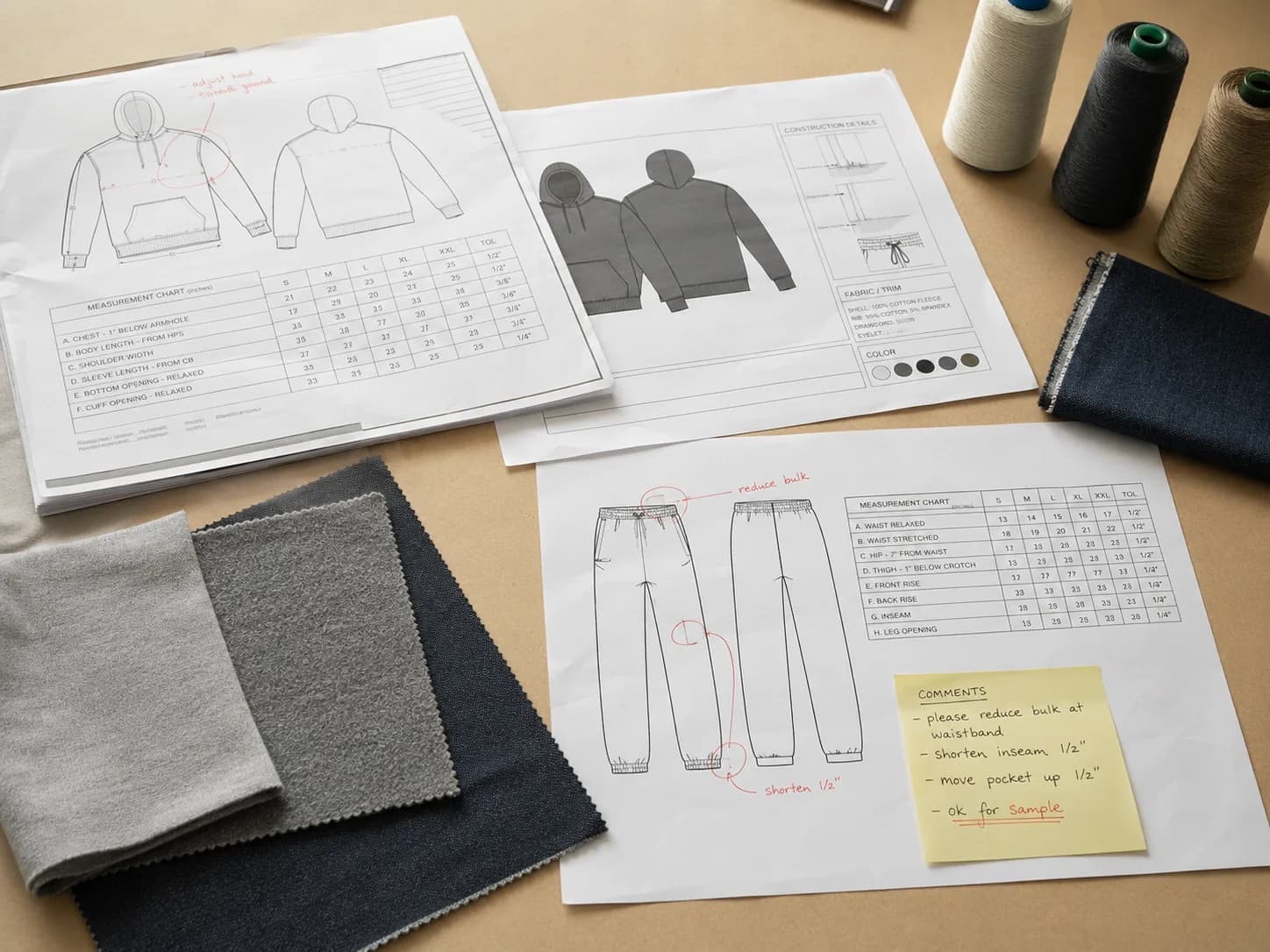
- Tech pack or detailed spec: measurements, construction notes, artwork, and label placement.
- Target quantity range per style and colorway.
- Destination market in the EU and any retailer-specific rules you already know.
- Target timing: sample need date and bulk ex-factory window if known.
- Quality, testing, and audit requirements as a list, not a vague premium claim.
- Preferred Incoterm and payment direction if already decided internally.
Typical development path for OEM apparel
Most private label programs move through predictable gates. Skipping a gate saves a week early and costs a month later.
- Brief review and factory matching by product fit.
- Initial sample for fit, construction, and commercial feasibility.
- Lab dip and material confirmation for color-driven styles.
- Size set across the grade range.
- Pre-production sample reflecting bulk intent.
- Bulk production with inline checks and pre-shipment inspection as agreed.
- Packing, export documents, and freight handover under the chosen Incoterm.
A practical production window for many programs is about 60 to 90 days after sample approval and order confirmation, plus sea freight to Europe. Sampling and fabric booking sit in front of that window.
Factory matching by product category
Bangladesh strength spans knits, fleece, denim, wovens, kidswear, and more, but one factory rarely covers every future category. Match style to capability instead of forcing a single partner to claim everything.
- Core jersey and basic knits: look for stable grading and trim discipline.
- Fleece and sweats: confirm fabric weight range and wash stability if applicable.
- Denim: separate wash development from basic cut-and-sew assumptions.
- Woven shirts and blouses: check collar, cuff, and buttonhole consistency.
- Kidswear: treat safety and labeling rules as a distinct workstream.
Approvals and quality discipline
Private label reputation lives in repeat orders. Approvals are how you protect that repeat business. Use written sign-off on color, size set, PP sample, trims, and packing before bulk cutting.
- Store each approval round with date, approver, and file reference.
- Separate fit comments from construction comments in feedback.
- Confirm inspection method and AQL language before bulk if your program uses them.
- Treat unknown compliance fields as unknown, not as assumed yes.
For a step-by-step gate list, use the pre-production approval checklist alongside this guide. It aligns merchandising, technical, and operations on the same reference package.
Artwork ownership is a common private label friction point. Confirm who prepares care labels, hangtags, and packaging art, and which version number is approved for bulk. Last-minute artwork swaps are a frequent cause of trim delays in Bangladesh programs.
Where a sourcing partner fits private label programs
EU brands without a Dhaka office often work through apparel supplier support or a sourcing partner to keep one accountable thread across factories. That can include tech pack review, sampling follow-up, trim chasing, inline reporting, and export document coordination. The brand still owns product decisions, consumer claims, and final commercial release.
- Multi-category assortments that need more than one factory type.
- Teams that need ground coordination for inspection and packing checks.
- Programs that want factory matching without managing every mill relationship directly.
- First-time Bangladesh private label launches that need process structure.
Commercial terms and export readiness
Private label success is not only a good sample. It is a clean handover to your warehouse or 3PL in Europe. Align Incoterms, payment triggers, and document ownership before bulk so finance and customs are not surprised at port.
| Topic | Why it matters early | Typical owner on buyer side |
|---|---|---|
| Incoterm | Defines cost and risk transfer point | Operations or finance |
| Payment method | Sets shipment release conditions | Finance |
| Document list | Avoids LC or customs rework | Compliance and ops |
| Packing rules | Protects retail presentation | Merchandising ops |
| Testing evidence | Supports destination requirements | Compliance |
Do not treat coordinator marketing logos as proof that Milky or any desk holds BSCI, GOTS, OEKO-TEX, or similar certificates. Ask for the exact evidence your program requires and verify it against your current list.
Season planning should include a short internal sign-off before the brief leaves Europe: product ready, label rules ready, commercial terms ready, and compliance list ready. Missing any one of those pillars slows OEM development even when the factory match is strong.
Cost drivers to discuss openly
Private label clothing Bangladesh programs succeed when buyers understand what moves FOB before they compare two headline numbers. Reliable partners explain drivers instead of hiding them behind a single unit price.
- Fabric composition, weight, and dye method.
- Trim complexity: zippers, prints, embroidery, and branded components.
- Wash and finishing steps for denim and garment-dyed programs.
- Order volume and colorway count affecting setup and minimums.
- Compliance and testing scope tied to your destination market.
- Freight assumption embedded in the quoted Incoterm.
Ask for scenario notes when you change fabric or drop a colorway. A brief-based conversation stays current. A static website table does not.
Practical tips for a first private label collection
- Start with a narrow product family you can approve consistently.
- Limit colorways until lab dip discipline is proven with the partner.
- Build one shared folder for specs, approvals, and inspection reports.
- Score the partner after first delivery using the same criteria as selection.
- Plan season two only after you archive what worked and what failed in season one.
OEM apparel Bangladesh programs compound in efficiency when the brief gets sharper each cycle. Carry forward fit notes, trim lead time lessons, and document corrections instead of resetting the relationship every season.
Share this guide with finance and operations stakeholders early so Incoterms and document expectations stay aligned with merchandising timelines.
What is the difference between private label clothing Bangladesh and OEM apparel Bangladesh?
Private label usually emphasizes your brand on the product. OEM emphasizes production to your specification. In Bangladesh export practice, both often follow the same development and approval path. Clarify who supplies fabric, trims, and artwork.
Do we need a tech pack before contacting a partner?
A full tech pack is ideal. At minimum, send product type, sketch or reference style, size range, target quantity, destination, and timing. Partners can advise what is missing, but costing stays provisional until specs firm up.
Can one factory handle our entire assortment?
Sometimes for narrow ranges. Mixed knit, woven, and denim programs often need multiple production paths. Factory matching by category usually performs better than a single general claim.
How should EU buyers handle compliance questions?
Send a written requirement list: testing, labeling, audits, and any policy topics your counsel owns. Do not infer compliance from website logos. Verify evidence per program.
When should we involve a sourcing partner?
Consider apparel supplier support when you need multi-factory coordination, ground follow-up, or export program structure without opening a Dhaka office. Direct factory relationships can still work for focused, experienced buyer teams.
Ready to discuss a sourcing brief?
Share your product family, sample status, and market destination. We will help you prepare the next conversation around the details you provide.
Start a WhatsApp conversation