

France textile regulations for clothing brands sit within EU product rules and can also involve France-specific consumer information and environmental-policy expectations. For a Bangladesh sourcing programme, have French market requirements confirmed by the buyer's counsel or compliance lead, then turn them into product, label, claim and document actions. A factory match is useful only when it can work against that confirmed brief.
For France textile regulations for clothing brands, start with a buyer-owned requirement sheet. It should turn legal, retailer, material and product expectations into checks used while matching a factory, approving a sample and preparing shipment documents. A sourcing desk can coordinate that work in Bangladesh, but the brand remains responsible for the requirements it places on the market and the claims it makes to consumers.
Make the brief specific before factory matching
A request for compliance without a product and market context is too broad to screen suppliers well. Separate mandatory market information from a retailer's preferred audit platform and from a voluntary material or environmental claim. Name the intended production site if that matters to your audit policy, record the evidence owner, and set a date for checking status. This gives commercial, technical and compliance colleagues one working version of the brief.
- Product category, fabric composition, trims and destination markets
- Buyer code of conduct, social-audit format, chemical list and testing matrix
- Label copy, care information, packaging and consumer-claim approvals
- Documents requested, who provides them, and the date they must be current
- Escalation owner for an expired document, failed test or production change
Request evidence in the context of the order
Evidence is useful only when it is connected to the proposed production route. Ask which legal entity and facility a document covers, its issue and expiry dates, the product or process scope, and whether subcontracting is planned. A certificate, audit report or test result can support one part of a decision. It does not prove that a future style will meet every buyer requirement. Keep the original requirement beside the evidence and mark what still needs confirmation.
Work through order checkpoints
| Stage | Buyer provides | Sourcing coordination | Verify before moving on |
|---|---|---|---|
| Factory matching | Requirement sheet and destination | Request relevant current records | Site, scope and date match the brief |
| Development | Approved material, label and claim direction | Link test and document requests to the style | Sample components match the specification |
| Bulk | Revised risk or retailer instruction | Track evidence and production changes | No substitution affects the requirement |
| Pre-shipment | Final label and claim approval | Collect the agreed document pack | Records are complete for buyer release |
This table prevents a social audit, material certificate or laboratory report from being requested too late and treated as a shipment emergency. It also makes clear that a buyer approval, a factory record and a sourcing follow-up are different actions. The exact sequence should follow the buyer's contract, test protocol and retailer rules, not a generic online checklist.
Keep the supplier scorecard balanced
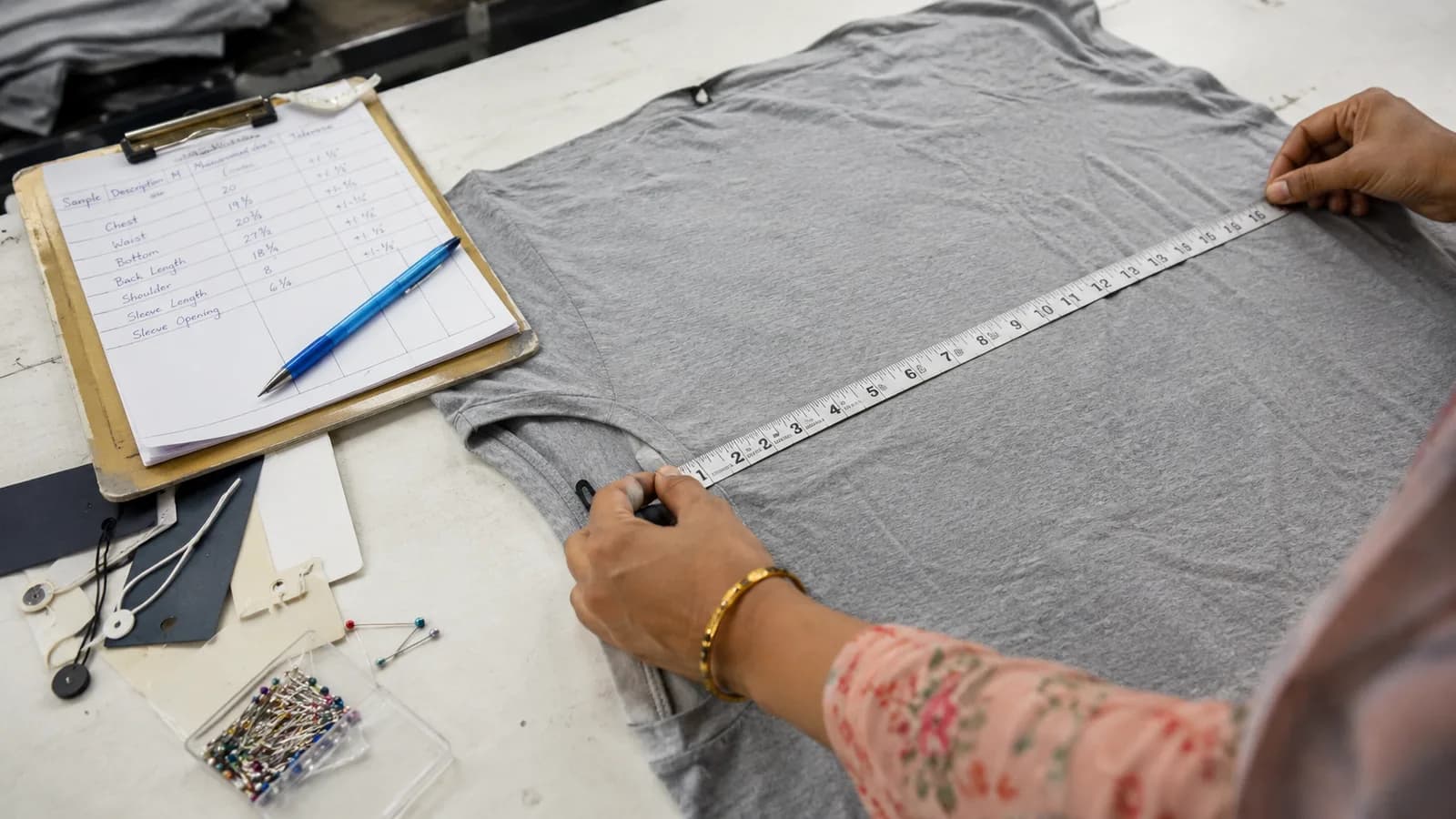
Compliance readiness, garment quality and commercial performance affect each other, but they are not the same score. A production unit can present an audit record and still need a clearer sample approval process. A passed test does not confirm fit, workmanship or delivery readiness. Score product capability, communication, sample discipline, quality checkpoints and document readiness in separate columns. That makes a weak area visible before an order is placed.
Use the same scorecard for an initial shortlist and for the order that follows. This does not mean reopening every decision at every meeting. It means recording what was reviewed, what remains open, and what would trigger a buyer decision. A late sample change, an expired audit record or a newly required market claim should be visible to the people who can decide whether the product route remains suitable. Clear records protect both the production team and the buyer from an assumption becoming an undocumented approval.
Keep the buyer role and sourcing role clear
Milky Fashions can work from requirements supplied by your team, request records during factory matching, keep sampling and bulk checkpoints visible, and flag missing or inconsistent information for your decision. It does not issue certificates, certify factories, test products, or replace legal counsel, an auditor, a laboratory, customs adviser or retailer approval team. Final obligations for France programmes should be confirmed by the buyer with the appropriate specialist.
That separation is important when commercial timing is tight. The sourcing team can report that a document has not arrived, a report names a different site, or a component has changed. It should not convert incomplete evidence into a promise. The buyer can then choose to seek further evidence, alter the product route, change the claim, or hold release. This is a more dependable arrangement than relying on broad statements about compliance readiness.
Keep the final record with the order file and make it accessible to the buyer colleagues who own product, compliance and shipment release. A short, current record is more useful than a long collection of unconnected attachments.
Create a France market pack before sampling
The EU Textile Labelling Regulation applies to textile products made available on the Union market and requires fibre-composition information. It also requires the information in the official language or languages of the Member State where products are available to consumers, unless that state provides otherwise. For France, buyer-approved French market copy is a key input. Confirm final fibre names, composition percentages, care wording, animal-origin statement if relevant, and other consumer information with the responsible market team.
Govern France-facing environmental claims with the brand
French authorities publish consumer information about textile environmental-cost display, often called an eco-score, alongside references to the EU textile-labelling framework. Status, scope, calculation and permitted use must be confirmed for the product and sale date. Do not ask a Bangladesh supplier to create marketing claims or scores from a general material description. Provide the exact approved method and data request if your programme needs one. Material documentation may support a claim, but marketing language needs review for the way it will be understood by consumers.
Frequently asked questions
- Do France textile regulations differ from general EU rules?
- France operates within EU product rules and may have additional national consumer, environmental or producer-responsibility requirements. Confirm the applicable position for your product, market role and sale date with France-qualified advice.
- Do clothing labels for France need French language?
- EU textile labelling rules require information in the official language or languages of the Member State where products are available to consumers, unless that state provides otherwise. Confirm final French-market content with the compliance owner.
- Can a sourcing desk calculate a French textile eco-score?
- It can help collect buyer-specified production information. It should not create or approve a score or claim unless the buyer supplies the current approved methodology, scope and final sign-off route.
- When should French requirements reach the factory?
- Before material and label approvals. Requirements arriving after sampling can require new artwork, information, testing or evidence and disrupt the production route.
Ready to discuss a sourcing brief?
For fashion brands, importers, and wholesale buyers. Share your product family, sample status, and market destination so we can prepare the next conversation.
Discuss your sourcing brief on WhatsApp