Since 19 July 2026, large companies in the EU have been prohibited from destroying specified categories of unsold apparel, clothing accessories and footwear under the Ecodesign for Sustainable Products Regulation, or ESPR. Medium-sized enterprises come into scope from 19 July 2030, while micro and small enterprises are currently excluded from the prohibition.
For fashion brand owners, sourcing managers, buyers and product developers, this is not only an end-of-season inventory issue. It changes the economics of over-ordering. A garment that cannot be sold as planned can create markdown, storage, redistribution, repair, donation and compliance costs. That makes buying quantities, product validation, forecasting and supplier coordination increasingly important before production begins.
What exactly has the EU banned?
The rule sits within Regulation (EU) 2024/1781, the Ecodesign for Sustainable Products Regulation.
Article 23 establishes a general principle that economic operators should take measures that can reasonably be expected to prevent the need to destroy unsold consumer products.
Article 25 then prohibits the destruction of products listed in Annex VII. The current list includes knitted and crocheted apparel under CN Chapter 61, woven apparel under Chapter 62, specified leather clothing and accessories, certain headgear, and footwear. It does not mean that every textile product automatically falls within the current destruction prohibition.
One of the most important details for fashion businesses is the EU definition of "destruction."
Sending unsold clothing for recycling can still count as destruction. Under the ESPR framework, destruction includes intentional damaging or discarding that leads to recycling, other recovery or disposal. Sending a product solely for preparation for reuse, such as refurbishment or remanufacturing, is treated differently.
This distinction matters operationally. A brand cannot assume that sending brand-new excess inventory to a textile recycler automatically solves the issue.
Who does the ban apply to?
The application dates are deliberately phased.
| Business category | Application of the destruction prohibition |
|---|---|
| Large enterprises | From 19 July 2026 |
| Medium-sized enterprises | From 19 July 2030 |
| Small enterprises | Currently exempt from Article 25(1) |
| Microenterprises | Currently exempt from Article 25(1) |
The ESPR uses the EU definitions of micro, small and medium-sized enterprises. Under the EU SME framework, enterprise classification considers staff numbers together with turnover or balance sheet thresholds. Group relationships can also affect the calculation, so employee count alone is not always enough to determine company status.
There is also an anti-circumvention provision. An operator outside the prohibition cannot be supplied with unsold goods for the purpose of destroying them simply to avoid the rule.
For a broader regulatory view, buyers can also review our guide to EU textile regulations and Bangladesh sourcing.
When can unsold clothing still be destroyed?
The prohibition is not absolute.
Commission Delegated Regulation (EU) 2026/296 sets out specific derogations. These include situations where a product is dangerous, legally non-compliant, infringes intellectual property rights, cannot reasonably be prepared for reuse, is damaged or contaminated beyond viable repair, or has a design or manufacturing defect that cannot technically be repaired.
There are also defined circumstances involving donation. Where the other relevant derogations do not apply, products may qualify for destruction after being offered to at least three suitable social economy entities in the EU, or being offered through an accessible page on the economic operator's website for at least eight weeks, without being accepted.
The derogations are evidence based. Economic operators relying on them have to retain supporting documentation for five years and make it available to competent authorities when required. For damaged or defective goods, that evidence can include quality assessments, inspection records, technical evaluations and documentation showing why repair or refurbishment was not feasible.
Where destruction is legitimately permitted, the waste hierarchy still applies, with recycling preferred over other recovery and disposal.
This creates an important distinction for sourcing teams: "defective" should not become a casual commercial description. Quality decisions may need clearer evidence if goods eventually become part of a destruction derogation.
Why this matters when sourcing apparel from Bangladesh
The ESPR does not automatically make a Bangladesh garment factory or sourcing partner legally responsible for an EU retailer's unsold inventory simply because it produced the garments.
The Regulation addresses economic operators within its regulatory framework, including manufacturers, importers, distributors, dealers, authorised representatives and fulfilment service providers. The legal position of each business depends on its actual role.
For a European fashion brand sourcing private label garments from Bangladesh, however, the commercial effects can move upstream.
If destruction is no longer an easy exit for excess finished stock, purchasing too much becomes more expensive to manage. A brand may therefore put greater emphasis on initial order quantities, size ratios, colour allocation, forecast accuracy, repeat-order capability and earlier identification of weak-selling styles.
That does not mean every buyer should simply demand very small production runs. Lower initial quantities can affect fabric commitments, dyeing economics, production efficiency and price. The more useful objective is to improve the relationship between the quantity committed before production and the level of demand confidence.
The same principle applies to development. Avoidable fit problems, shade issues, labelling mistakes or packaging errors become more consequential when large quantities of finished goods are difficult to redirect.
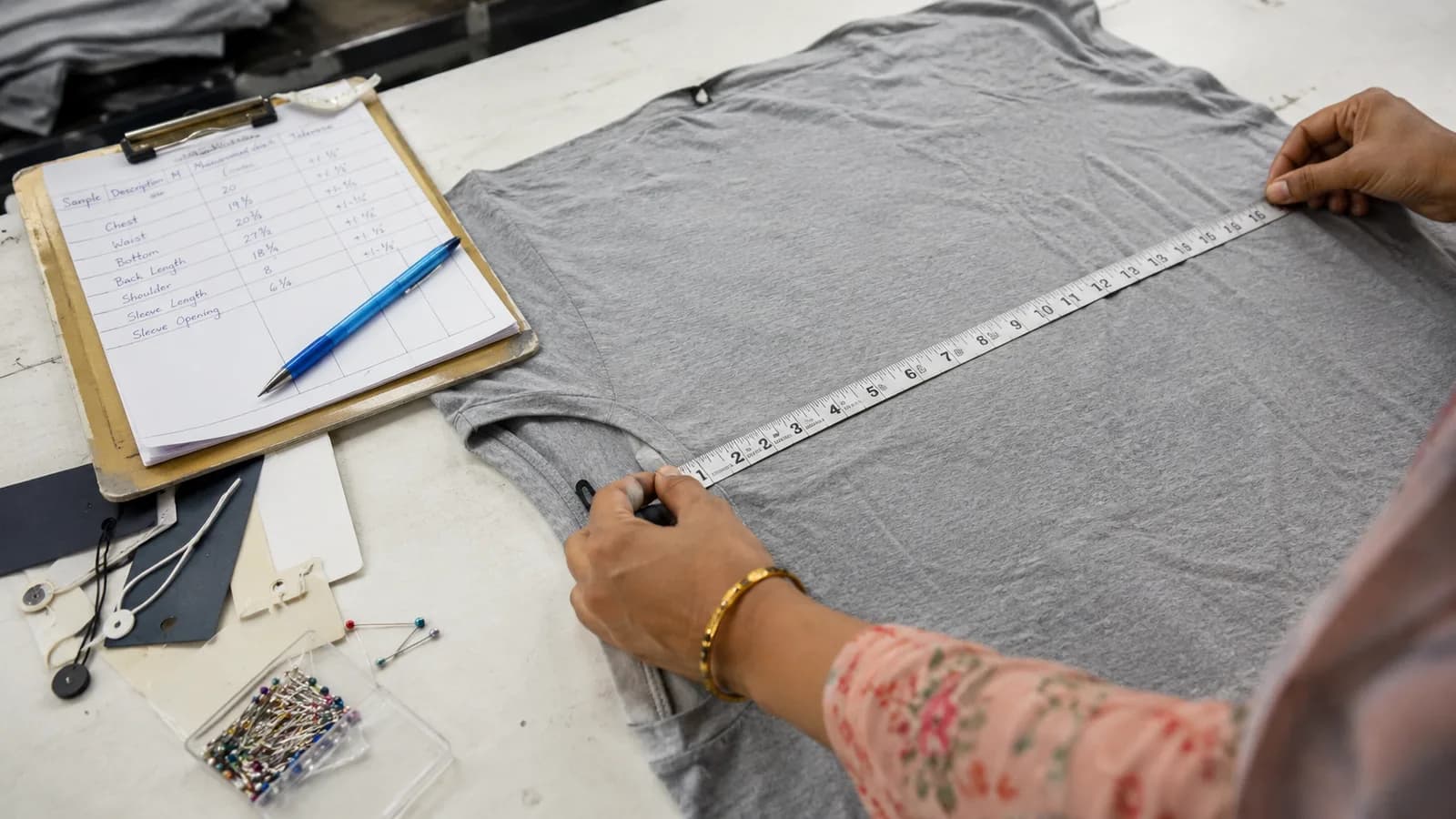
Stronger garment sample development and disciplined pre-production approval can therefore support inventory risk reduction as well as traditional quality control.
What buying teams should change upstream
The regulation is aimed at preventing destruction, not prescribing a particular apparel purchasing model. The following are therefore practical sourcing responses, rather than direct legal requirements imposed on Bangladesh suppliers.
| EU requirement or issue | Sourcing implication | Action for buying teams | Bangladesh supplier coordination point |
|---|---|---|---|
| Prevent avoidable destruction | Excess production becomes harder to dispose of | Review quantities before bulk commitment | Confirm realistic fabric, colour and style quantities before booking |
| Destruction ban for large enterprises | End-of-season excess has fewer disposal routes | Build inventory risk into buying decisions | Discuss repeat potential instead of automatically front-loading volume |
| Recycling can count as destruction | Recycling cannot be treated as the default escape route | Plan resale, reuse, repair and redistribution routes earlier | Avoid unnecessary product or trim choices that make reworking difficult |
| Damage derogation requires evidence | Quality failures need clearer documentation | Strengthen inspection and defect classification | Keep inspection records and corrective-action evidence |
| Some defective goods should be repaired where feasible | Rework becomes more commercially relevant | Decide repair thresholds before problems arise | Agree how repairable defects will be handled before shipment |
| Reporting and documentation are becoming more structured | Inventory data needs better traceability | Connect product, inventory and disposal records | Keep accurate style, quantity, shipment and quality records |
| Medium-sized companies enter the ban in 2030 | More brands will eventually be affected | Build processes before the mandatory date | Standardise sourcing records and approval controls now |
This approach fits naturally alongside a good garment Time and Action Calendar. A sourcing calendar should not stop at shipment. Decisions made during costing, sampling, colour approval and order placement can influence stock exposure months later.
A practical sourcing checklist for fashion buyers
Before confirming a Bangladesh apparel order, buying and product teams should ask:
- Is the first order quantity supported by demand evidence, or mainly by a price target?
- Can strong styles be replenished rather than placing the entire expected season quantity upfront?
- Have size curves and colour splits been challenged against historical sell-through data?
- Are fabric and trim choices suitable for repair, reworking or alternative use if necessary?
- Are fit, labelling, packaging and quality requirements fully approved before bulk production?
- Is there a documented process for dealing with damaged, rejected or cancelled goods?
- Can product and shipment records later be linked to inventory, returns and stock-disposal records?
- Has the brand defined alternatives for excess stock before the selling season closes?
Lead time still matters in this calculation. A brand that wants to rely more on controlled initial orders and repeat production needs realistic expectations about material booking and manufacturing windows. See our guide to Bangladesh garment lead time planning.
The bigger shift is from disposal planning to production planning
The European Environment Agency estimates that around 4% to 9% of textile products placed on the European market have historically been destroyed before use, equivalent to roughly 264,000 to 594,000 tonnes per year. The EEA also identifies demand forecasting and inventory management as important ways to reduce unsold textile volumes.
That is why the sourcing implication of the EU ban is broader than waste management.
For apparel buyers, prevention starts before a carton reaches Europe.
Better forecasting, controlled order commitments, accurate product development, documented approvals, earlier quality intervention and workable replenishment strategies can all reduce the chance that stock becomes commercially stranded.
The regulation also sits within a much wider EU textile policy environment. Brands should treat it separately from, but alongside, EU Textile EPR and Digital Product Passport readiness. These rules address different obligations and should not be collapsed into one compliance requirement.
For Milky Fashions, the relevant role is sourcing coordination rather than legal compliance advice. As an independent sourcing partner in Dhaka, we can work with buyers and partner factories on product development, factory coordination, sampling, production follow-up and quality processes that support more controlled purchasing decisions.
If you are reviewing how your Bangladesh sourcing programme should respond to changing EU inventory and compliance expectations, contact us on WhatsApp.
Frequently asked questions
When did the EU ban on destroying unsold clothing start?
For large enterprises, the prohibition began applying on 19 July 2026. Medium-sized enterprises come within the Article 25 prohibition from 19 July 2030. Micro and small enterprises are currently excluded from the prohibition, although the Regulation also contains an anti-circumvention provision.
Does the EU ban apply to clothing made in Bangladesh?
The rule is not determined by whether a garment was manufactured in Bangladesh, China, Türkiye or another sourcing country. It concerns specified unsold consumer products within the ESPR framework and the economic operators handling them in the relevant EU market context. For EU brands importing garments from Bangladesh, the practical sourcing issue is therefore how buying and production decisions affect eventual excess inventory.
Can an EU fashion brand recycle unsold clothing?
Not as a general workaround to the prohibition. The ESPR concept of destruction includes recycling of unsold products. Preparing products for reuse, including refurbishment or remanufacturing, is treated differently. Where a valid derogation permits destruction, recycling is prioritised over less preferable waste-treatment options.
Can damaged garments still be destroyed?
Potentially, but only under defined circumstances. The 2026 delegated regulation allows a derogation where products are unacceptable for consumer use because of damage, deterioration or contamination and repair or refurbishment is not technically feasible or cost-effective. Supporting documentation must be retained.
Does a Bangladesh supplier have to guarantee that an EU buyer will not have unsold stock?
No such general requirement is created merely because a Bangladesh supplier manufactured the order. Forecasting, merchandising and inventory ownership remain separate commercial questions. However, buyers may increasingly ask suppliers and sourcing partners for better flexibility, production records, quality documentation, rework options and more disciplined order planning as part of their own inventory-risk strategy.
Sources
- Regulation (EU) 2024/1781, Ecodesign for Sustainable Products Regulation, particularly Articles 23, 24 and 25 and Annex VII.
- Commission Delegated Regulation (EU) 2026/296 on derogations from the prohibition of destruction of unsold consumer products.
- Commission Implementing Regulation (EU) 2026/2 on disclosure of discarded unsold consumer products.
- European Commission, "Ban on destruction of unsold clothes and shoes enters into application," 17 July 2026.
- European Environment Agency, "The destruction of returned and unsold textiles in Europe's circular economy."
- European Commission, SME definition.
Ready to discuss a sourcing brief?
Share your product family, sample status, and market destination. We will help you prepare the next conversation around the details you provide.
Discuss your sourcing brief on WhatsApp